
SEO Pricing What Our Packages Include and What They Cost Explained
SEO pricing can help to range from approximately $50 to more than $10,000 per month. The final expense reflects a company’s goals, website condition, competition, and required organic visibility work.
The Reality of SEO Package Pricing
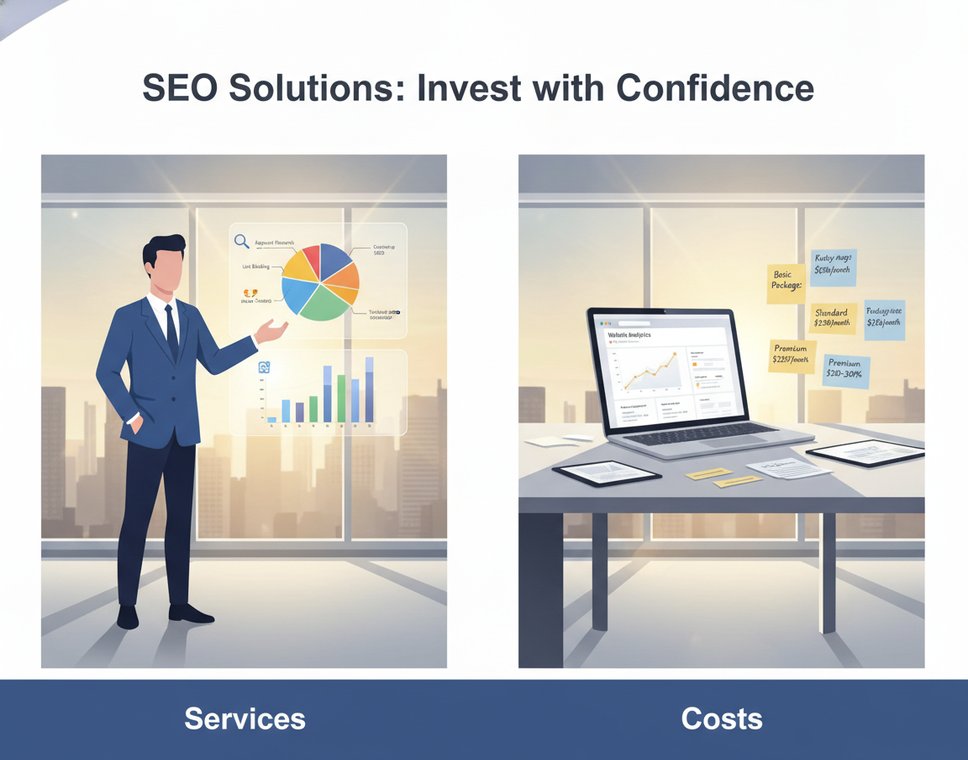
Businesses might choose hourly consulting, project-based work, or monthly retainers. Standard SEO packages often cost between $500 and $5,000 per month, while focused plans can start near $250. The right investment depends on customer value and the distance between a business and its competitors.
Anatoly Zadorozhnyy has assisted businesses grow through organic search since 2008. With greater than 18 years of experience, he has supported hundreds of companies, improved Google rankings, and earned initial-page positions for thousands of keywords.
Affordable SEO services from Affordable SEO Expert pursue steady progress without unnecessary complexity in many cases. Each plan reflects the business, its market, and the search outcomes it needs.
Essential Lessons
- SEO pricing varies by goals, competition, website health, and project scope.
- SEO packages might apply hourly, project-based, or monthly billing.
- Many standard plans expense between $500 and $5,000 per month.
- Affordable SEO services may improve visibility with a focused strategy.
- Long-term SEO work can increase qualified organic traffic and rankings.
- Anatoly Zadorozhnyy brings more than 18 years of SEO and digital marketing experience.
SEO Pricing What Our Packages Include And What They Cost: A Practical Guide
SEO packages offer defined services for a fixed monthly fee. They might include keyword research, content updates, technical fixes, link building, local SEO, and performance reports. The appropriate plan depends on a company’s market, site, goals, and growth stage.
 SEO Package Pricing
How SEO Pricing Varies By Business Size, Competition, And Goals Explained
A small local business may require location pages, Google Business Profile strengthen, and review management. One basic local plan often costs $500 to $1,500 per month. A SaaS company may need technical work, product written material, and pages supporting a longer buying cycle.
National brands and large B2B companies encounter stronger competition in many cases. Their campaigns often require deeper research, additional page copy, digital PR, and authority building. Mid-level or national SEO services may expense $2,500 to $5,000 or more each month.
What Businesses Can Expect From Affordable SEO Services
Affordable SEO services should establish straightforward priorities. A smaller plan may cover an audit, keyword mapping, page improvements, local content, and simple reporting. It should offer a useful path forward rather than promise instant results.
The SEO cost should reflect the work required. A limited budget can strengthen steady progress across a small group of pages. It may not cover large-scale page copy production, complex technical changes, or competitive national terms.
Why Ongoing Search Engine Optimization Supports Long-Term Website Ranking: A Practical Guide
Search results change as competitors publish new pages and Google updates its systems. Websites can develop broken links, outdated information, or slow pages over time. Monthly work keeps these issues visible and allows the campaign to respond in real-world use.
Ongoing SEO services might cover useful content, existing-page improvements, technical fixes, ranking analysis, and relevant authority building. This sustained effort protects effective pages while creating opportunities for qualified traffic.
How Anatoly Zadorozhnyy’S Experience Shapes Each SEO Campaign: A Practical Guide
Anatoly Zadorozhnyy has observed major updates in the SEO industry since 2008. His approach emphasizes actions that support rankings, qualified visits, and business growth. Each campaign reflects the web property’s position and the market it serves.
His work has supported hundreds of companies rank for thousands of earliest-page keywords. Many rankings have continued performing well through careful content work, technical attention, and regular performance reviews.
| Business type in many cases | Common focus | Typical monthly SEO cost |
| Minor local business | Local pages, reviews, maps, and technical basics in practice | $500–$1,500 |
| SaaS company | Product content, topic clusters, and technical SEO | $1,500–$5,000+ in real-world use |
| eCommerce brand in practice | Category pages, product page copy, structured data, and authority | $2,500–$7,500+ in practice |
| Large B2B company in practice | National content, digital PR, research, and lead-focused optimization | $5,000–$25,000+ in real-world use |
Exploring Included In An SEO Package?
A complete SEO package combines research, written material, technical work, and performance tracking. The exact mix reflects the website, market, and growth goals. Strong search engine optimization produces helpful improvements for visitors and search engines.
Initial Website, Technical, And Content Audits
Work often begins with a complete website review. An enterprise website audit can reveal crawl issues, weak structure, slow templates, broken links, and poor mobile performance.
A written material audit examines accuracy, depth, duplicate topics, and pages that no longer attract traffic. An advanced analytics audit tests tracking strength, goals, visitors sources, and conversion paths. One Google E-E-A-T audit reviews signals related to experience, expertise, authority, and trust.
Local companies may receive a Google Business Profile audit and setup. Apple Maps, Bing Places, Map Pack visibility, and citation tracking may strengthen local search engine optimization.
Keyword Research And Competitor Analysis Explained
Keyword research starts with seed terms tied to company products, services, and customer questions in practice. It measures search demand, intent, competition, and the effort required to earn visibility.
Competitive keyword gap analysis identifies topics that competing websites rank for, but the client does not in real-world use. A competitive backlink audit demonstrates which pages attract authority and which sources might support outreach. Ahrefs, Semrush, Moz, AnswerThePublic, Screaming Frog, and SpyFu can resource this research.
On-Page SEO Optimization And Content Improvements: A Practical Guide
On-page SEO optimization strengthens page elements that visitors see and search engines read. This work may refine headings, copy, image text, links, titles, and topic coverage.
Content improvements can add clearer calls to action, stronger service pages, better navigation, and updated blog posts. A call to action audit checks whether each site offers a easy-to-follow next step without pressure or confusion.
Technical SEO Implementation And Website Performance Checks
Technical work converts audit findings into practical updates in many cases. Common tasks cover fixing crawl errors, managing redirects, removing deadweight pages, reviewing URL parameters, improving structured data, and resolving indexation problems.
Performance checks cover site speed, mobile usability, Core Web Vitals, server response time, and template stability. Reattribution monitoring can reveal visitors or conversion changes after analytics updates, redirects, or site migrations.
Content Creation, Content Optimization, And Search Intent Alignment Explained
Content should reflect the reason behind a search in practice. A product query may require detailed features and proof. An educational query may need a clear guide, examples, and answers to common questions.
Human-led, AI-assisted written material can help to support production when experienced writers direct research, tone, facts, and final edits. People-first page copy requires judgment, creativity, and subject knowledge. Fully autonomous text might miss context, contain factual errors, or feel disconnected from its audience.
Some packages cover onsite written material deliverables, blog content optimization, and web content optimization. One cited pricing example charges $450 for a 1,000-word blog post in practice. Its benefit relies on useful research, sound structure, accurate information, and search intent alignment.
Authority Development, Link Building, And Digital PR Explained
Authority development assists websites earn trust beyond their own pages. Ethical link building may cover brand mention outreach, relevant publisher placements, expert contributions, and useful digital assets.
Digital public relations may promote independent research, original statistics, infographics, expert commentary, and other linkable resources. Public relations link building often belongs to higher-investment campaigns because it requires research, outreach, creative work, and relationship management in many cases.
Quality matters additional than link volume. Relevant coverage from a trusted publication may supply greater value than many unrelated links.
Rank Tracking, Analytics, Reporting, And Ongoing Strategy Explained
Rank tracking establishes a baseline for important terms and locations. Reports may monitor rankings, organic visits, leads, conversions, indexed pages, backlinks, and local visibility over time.
Monthly reporting should explain what changed, what the data indicates, and what comes next in real-world use. Analytics and research software measure progress, while senior strategy time keeps campaigns aligned with business goals in real-world use.
| Package activity in many cases | Typical work | Business benefit |
| Research and audits in real-world use | Keyword gaps, technical checks, written material reviews, analytics review | Straightforward priorities and fewer wasted efforts |
| Content delivery in practice | Onsite pages, blog posts, updates, and intent-based improvements in practice | More useful pages for customers and search engines |
| Technical implementation in real-world use | Crawl fixes, speed checks, redirects, parameters, and indexation work in many cases | A cleaner domain that is easier to access and understand |
| Authority development in practice | Link building, brand outreach, digital PR, and linkable assets in real-world use | Stronger credibility and broader visibility in practice |
| Measurement | Rank tracking, analytics, reporting, and strategy reviews in many cases | Better decisions based on measurable progress in real-world use |
A $3,500 monthly small and midsize business package can cover two onsite content deliverables valued near $900. It might also include five hours of consulting and implementation near $500, three hours of senior strategy near $300, and reporting and research software near $300. Authority development and link building can account for around $1,500, with project management included in the listed costs.
SEO Package Pricing And Common Billing Models Explained
SEO pricing reflects required work, market conditions, and business objectives in practice. A local company may need a focused campaign, whereas a national brand may require extensive technical and written material support. Each billing model offers another way to control a digital marketing budget and strengthen online visibility.
Monthly retainers are common because search performance requires consistent attention in real-world use. Search trends shift, competitors publish written material, and technical problems may emerge without warning. A defined scope supports businesses connect the monthly fee with measurable work.
Monthly SEO Retainers For Ongoing Optimization
A monthly retainer covers continuing tasks, including technical checks, written material updates, keyword tracking, link development, and reporting. The team can help to revise the plan as rankings and customer behavior change.
Reported management fees range from around $250 to more than $10,000 per month. One agency lists plans at $950, $1,950, $3,500, $6,500, and $12,500 per month in real-world use. Custom pricing can apply when a website has many pages, several locations, or strong national competition.
Project-Based SEO For Audits And Defined Campaigns
Project-based SEO has a fixed scope and defined endpoint in real-world use. This client pays a lump sum for work such as a technical audit, an onsite review, an email series, or many location pages.
Reported project fees range from $5,000 to $50,000 in real-world use. That model suits companies seeking expert input for one major task. It may assist an internal team that manages daily updates after the project ends.
Hourly SEO Consulting And Team Training: A Practical Guide
Hourly consulting provides specialist advice without requiring a long retainer. It can address a website review, content plan, analytics questions, or technical concern.
A cited consulting rate is $100 per hour. This time may cover direct advice or client-team training. The approach can help to help smaller firms with limited budgets and staff members seeking stronger in-house skills.
Typical Low-Cost SEO Packages From $150 To $500 Per Month: A Practical Guide
Low-price plans often cover basic reporting, limited keyword tracking, simple on-page edits, and minor technical checks. They can suit a new local business with a small website and narrow service area.
At this cost, scope matters greater than the label. A business should verify how many pages receive attention and how often the team provides updates. Limited hours can slow progress in a crowded market.
Mid-Range SEO Packages From $950 To $2,000 Per Month: A Practical Guide
Mid-range plans often include regular technical work, page copy improvements, local SEO support, and competitor research. Some plans contain new articles or landing pages each month.
This range can help to suit a growing business seeking steady gains in online visibility. The best benefit comes from easy-to-follow tasks, useful reports, and a strategy tied to leads or sales.
Upper-Range SEO Packages From $2,500 To $5,000 Per Month
Upper-range services support larger websites and more difficult search markets. Work might contain detailed audits, content production, conversion reviews, digital PR, and link building.
These campaigns require close coordination among SEO specialists, writers, developers, and marketing staff. This monthly plan should explain how each role advances the broader digital marketing objective.
High-Investment SEO Services From $5,000 To $25,000 Or More Per Month Explained
High-investment campaigns serve national brands, large online stores, and companies in highly competitive fields in real-world use. They may cover thousands of pages, several regions, advanced analytics, technical development, and extensive page copy programs.
Costs above $10,000 may reflect domain size, market count, and competitive intensity. A custom plan may cover senior strategy, frequent testing, digital PR, and close performance reviews.
| Billing model in real-world use | Typical expense | Common work | Best fit |
| Monthly retainer in real-world use | $250 to additional than $10,000 per month | Technical checks, page copy updates, link work, tracking, and reports | Businesses that need ongoing search growth |
| Project-based SEO in real-world use | $5,000 to $50,000 in practice | Audits, email series, technical fixes, and location page campaigns | Companies with a defined SEO task in real-world use |
| Hourly consulting in practice | About $100 per hour in practice | Advice, reviews, planning, and team training in real-world use | Minor teams with internal staff |
| Low-price package | $150 to $500 per month in practice | Basic tracking, limited edits, and simple reporting in real-world use | New or small local businesses in practice |
| Mid-range package in real-world use | $950 to $2,000 per month in many cases | Content strengthen, local SEO, audits, and competitor research | Growing companies with straightforward market goals |
| Upper-range package in many cases | $2,500 to $5,000 per month in many cases | Advanced page copy, technical work, digital PR, and link building | Established brands in competitive markets in practice |
| High-investment service in real-world use | $5,000 to $25,000 or more per month | Large-scale strategy, development, analytics, and multi-market campaigns in practice | National brands and large online businesses in many cases |
Ways To Choose The Right SEO Services For The Budget
The right package should reflect a company’s growth stage, market, technical needs, and revenue goals. A straightforward plan helps steady website ranking without funding unnecessary tasks.
Matching SEO Investment To Business Growth Stage Explained
A new local business might need page copy creation, basic technical fixes, Google Business Profile support, and local citations. These SEO services establish a effective base for local search visibility.
An established national brand can need advanced page copy production, technical audits, and custom link building. A large eCommerce store can gain additional from product schema, category indexing, keyword mapping, and improved site structure than fixed blog volume.
Comparing Deliverables Instead Of Choosing By Price Alone: A Practical Guide
Businesses should review each provider’s monthly deliverables. A valuable proposal lists audits, optimized pages, new written material, outreach, technical work, reporting, and strategy reviews.
Two packages can cost the same yet offer different value. One can prioritize blog volume, while another enhances landing pages that support sales and business goals.
Evaluating The Quality Of Content And Backlinks
Strong content should match search intent, answer customer questions, and reflect the company’s expertise. It should read naturally and guide visitors toward a helpful next step.
Quality backlinks come from applicable publications, industry websites, and trusted local sources. A provider promising many links without explaining placement or relevance can produce avoidable website ranking risks.
Checking Reporting, Communication, Tools, And Strategy
Reliable SEO services contain clear reports connecting work with traffic, leads, sales, and visibility. Reports should show completed tasks, key changes, ranking movement, and planned work.
Regular communication assists businesses respond to new products, seasonal demand, and market updates. Access to Google Analytics, Google Search Console, Semrush, or Ahrefs supports clearer reviews and better decisions.
Understanding Contract Length, Flexibility, And Campaign Timelines
Search optimization needs time for technical updates, page copy growth, and authority building to take effect. A provider should explain expected milestones rather than promise instant findings.
Before signing, a business should review the contract term, notice period, content ownership, reporting access, and cancellation rules. Flexible terms help companies adjust SEO services as needs change.
Recognizing Risks Associated With Cheap SEO Packages: A Practical Guide
Very low-price plans might rely on copied content, weak links, automated submissions, or limited technical work. These tactics can help to waste budget and weaken trust with search engines and customers.
A careful buyer values easy-to-follow deliverables, skilled work, and honest timelines. The best package assists valuable growth, protects website ranking, and fits the company’s long-term investment capacity.
Summary
SEO packages fund the sustained work required for search engine optimization in many cases. They cannot guarantee automatic outcomes or initial-page rankings within two months. Standard plans generally cost $500 to $5,000 per month, while larger agency retainers can reach $50,000, depending on scope and business needs.
Project-based SEO can expense $5,000 to $50,000, while hourly consulting can cost about $100 per hour. A suitable plan should connect audits, keyword research, technical updates, written material, link building, reporting, and strategy with easy-to-follow business goals.
Anatoly Zadorozhnyy and Affordable SEO Expert offer affordable SEO services centered on organic rankings, qualified organic visits, and durable online visibility. Businesses can assess their needs and request a free consultation or proposal through Affordable SEO Expert.
Through steady effort and realistic goals, search engine optimization can strengthen online visibility over time. A thoughtful investment can give businesses a stronger path toward valuable traffic, better rankings, and lasting growth.